EDITOR 簡妤安 Annie Chien|TRANSLATOR Aurora Lin|PHOTOGRAPHER Leon Hung
隱身台北市大安區仁愛路靜巷的私廚「誰來吔 Who’s here」,採預約制的大門背後,更像一間等待熟客推門而入的私宅餐桌。名字帶著粵語語氣詞的親切提問——「誰來呀、誰在裡面呀?」既低調,也帶著一點神秘與溫度。
坐鎮其中的,是做菜超過四十年的新加坡籍粵菜名廚溫國輝(Chef Wen)。從香港大排檔起步,二十多歲赴新加坡,在異地從不習慣到落地生根,一待便是三十多年;2003年,輾轉來到台灣,也曾遠赴雅加達、孟買掌廚,人生與鍋鏟幾乎同步前行。談起這些經歷,他沒有傳奇式的敘述,只淡淡說:「每一段都影響很深,我很愛這一行。」
或許正因如此,Chef Wen 的料理沒有炫技,他的菜,介於粵菜細膩火候與南洋香料的熱情之間,充滿讓人坐下來、好好吃一頓飯的理由。在「誰來吔 Who’s here」,一桌菜承載了味道、時間、文化,以及一位廚師走過半生後對佳餚的溫潤品味。

A Life Seasoned by Forty Years at the Stove
Private Kitchen Who’s here|Chef Wen Kuo-Hui
Hidden in a quiet lane off Ren’ai Road in Taipei’s Da’an District, Who’s here keeps a low profile. Reservation-only, it feels less like a restaurant and more like a private dining room—somewhere you return to, rather than discover.
The name comes from a casual Cantonese phrase—“Who’s there?” or “Who’s inside?” Simple, familiar, and quietly inviting.
At the center is Chef Wen Kuo-Hui, a Singapore-based Cantonese chef with over forty years of experience. Most guests simply call him Chef Wen.
He began in Hong Kong’s dai pai dong stalls, learning the trade the hard way. In his twenties, he moved to Singapore. It wasn’t easy at first—he even thought about going back—but he stayed, and ended up building a life there for more than thirty years. In 2003, he came to Taiwan, with periods in Jakarta and Mumbai along the way. He doesn’t make much of it.
“Every stage mattered,” he says. “I just like cooking.”
That mindset carries into his food. There’s no showmanship. His cooking sits between the clarity of Cantonese cuisine and the warmth of Southeast Asian flavors—food that simply makes you want to sit down and eat.
At Who’s here, the focus isn’t on presentation. It’s on whether the dish feels right.

四十年堅持,從香港爐火走向星馬多元料理
Chef Wen 的廚藝,並非來自單一體系,更像一段橫跨城市與文化的歷程。他年輕時從大排檔、酒樓、燉湯、燒臘、點心與爐台幾乎全站過一輪。粵菜講究分工細密,而他選擇讓自己經歷所有位置,也因此打下極為紮實的基本功。「二十幾歲就站上爐子」,成為日後被邀往新加坡發展的關鍵。
初到新加坡時,一切陌生到幾乎想回香港,但時間讓異鄉變成第二個家。於新加坡三十多年的歲月裡,他曾在酒樓、高級飯店、高爾夫俱樂部掌廚,也在多元文化環境中吸收南洋料理精神。對外界稱讚他精通粵菜與星馬料理,他仍謙虛地以粵語笑著說道:「小小的。」
「我們做廚房的,不會說哪一道菜好不好,是食材好不好。」這句話幾乎概括了他四十年的信念——好材料,自然成就好味道。在他眼中,料理不是技術的炫耀,是對食材的理解,或許因為長年在外,Chef Wen 更相信,美食本身,就是最不需要翻譯的語言,訪談中即使中文不熟練,但 Chef Wen 的料理成為人與人之間最棒的橋樑。
From Hong Kong to Singapore
Chef Wen didn’t come up through a single path. Early on, he worked through almost every station—soups, roast meats, dim sum, and the wok—building a solid, practical foundation. “I was already on the wok in my twenties,” he says. That eventually led him to Singapore.
The beginning was unfamiliar, but over time it became home. Over three decades, he worked across restaurants, hotels, and private clubs, gradually taking in the flavors around him. When people say he understands both Cantonese and Singaporean cooking, he smiles. “Just a bit.”
For him, cooking is straightforward. “We don’t really say a dish is good or not,” he says. “We look at the ingredients.” That idea has stayed with him throughout his career. Technique matters, but only after the ingredient.

誰來吔!鑊氣、火候與私廚溫度
「誰來吔 Who’s here」的誕生,本身就帶著一段餐桌故事。餐廳團隊分享,背後低調的企業負責人曾在台北私廚品嚐 Chef Wen 的料理後深深著迷,一年造訪七十幾次,最終促成這間餐廳的誕生。
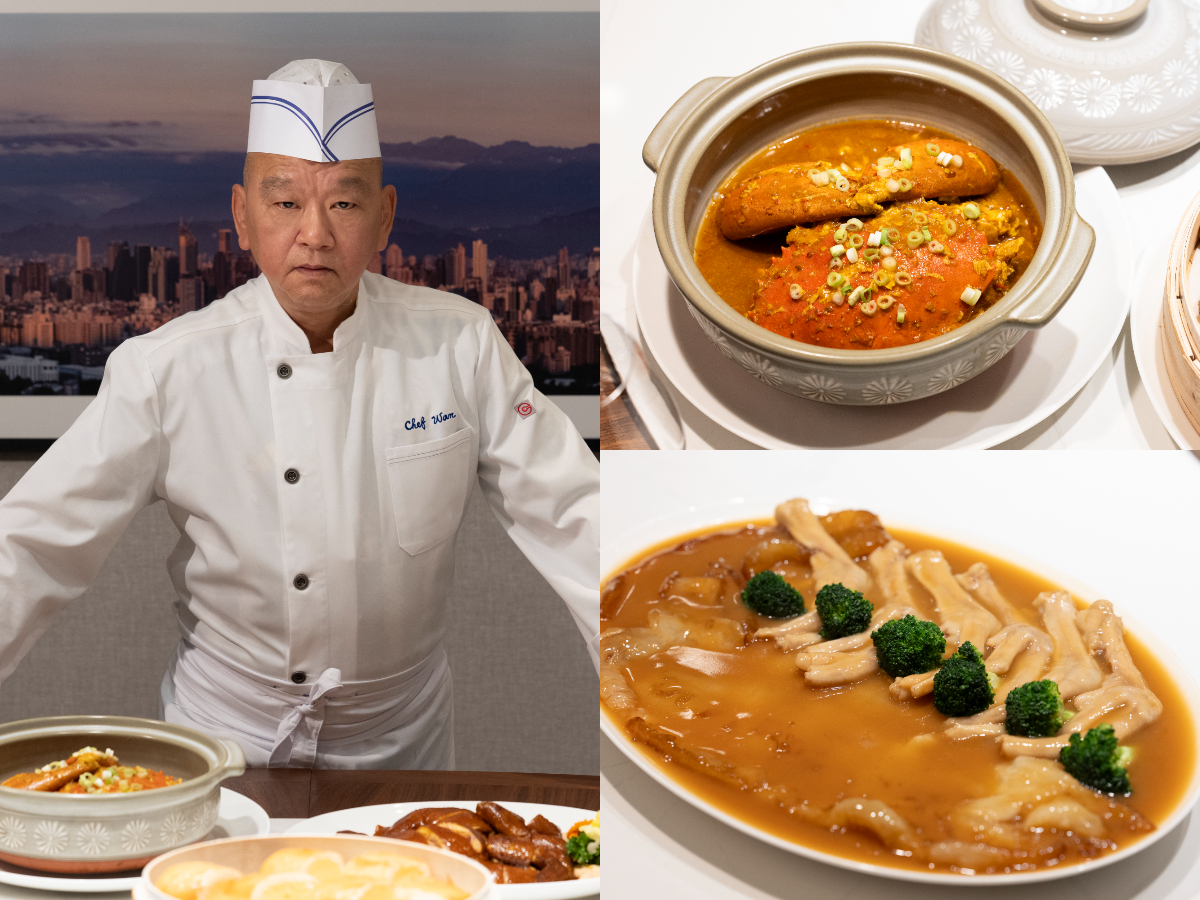
在這裡,真正的主角始終是「火」。Chef Wen 最重視的,是中餐靈魂——鑊氣。他解釋,大火快炒會產生焦香,小火則偏向悶煮感,差別不只在技術,更在時間與節奏的掌握。像招牌辣椒螃蟹,必須依靠強火瞬間激發香氣,而幾乎所有菜餚,都離不開火候的精準判斷。

他的料理橫跨粵菜與新加坡風味,但在他心裡兩者並不混淆。粵菜講求食材原味,新加坡料理則運用辛香料與醬汁創造層次;不同文化,卻都回到同一件事——尊重食材。無論是需細膩處理的〈碧綠鵝掌燴花膠〉,或需熟成與風乾工序的鼓油雞,全都展現慢慢完成的耐心。

Chef Wen 不談華麗概念,只希望客人「吃得開心」,在他看來,一道菜真正完成的時刻,不是在廚房,而是在餐桌上饕客露出滿足的表情。
Fire, Wok Hei, and the Kitchen
The story of Who’s here began with a regular guest—someone who tried Chef Wen’s cooking elsewhere in Taipei and kept coming back. More than seventy visits in a year. Eventually, that led to this space.
Here, everything comes back to fire. Chef Wen often talks about wok hei—that brief, smoky aroma that comes from high heat. He keeps it simple: strong heat brings out flavor quickly; lower heat builds it more slowly. It comes down to timing and control. Take the chili crab—it needs that moment of intense heat to come together. Most dishes here rely on that same instinct.
His cooking moves between Cantonese and Singaporean styles, but he doesn’t separate them. One focuses on the ingredient itself; the other builds layers with spice and sauce. In the end, it’s still about the ingredient. Dishes like braised goose web with fish maw, or soy sauce chicken that’s air-dried before cooking, all take time. Nothing is rushed. Chef Wen doesn’t talk about trends. He just wants people to enjoy the meal. To him, a dish is finished when someone takes a bite—and pauses.

私廚不追潮流,盼一桌好滋味
隨著當代餐飲愈來愈強調擺盤、話題與視覺設計時,Chef Wen 坦言,中餐與 Fine Dining 最大差別,在於中餐追求的是「熱熱上桌」,料理的價值,不在形式,而在那一刻的溫度。近年私廚成為風潮,他認為原因其實很單純——現代人太忙了。「大家要好好坐一桌吃飯,其實不容易。」私廚能依客人需求客製菜單、記錄每一次來訪,希望讓熟客每回都吃到不同驚喜。
談到未來,他沒有宏大的藍圖,只淡淡說也許會退休,回到新加坡生活。四十年的廚房歲月,讓他甚至不確定自己是否有所成就。在這份謙遜裡,看見一位老派廚師最珍貴的堅持——食材好是基本,用心才是關鍵。「誰來吔 Who’s here」真正帶來的,不單是粵菜與南洋風味的交會,而是一種正在逐漸稀少的餐飲精神:讓料理回到人本身,讓餐桌重新成為交流與陪伴的所在。當客人今天來、明天還想再來,那就是 Chef Wen 心中對餐飲最理想的註解。

A Table Worth Returning To
These days, dining often leans toward presentation and visual impact. Chef Wen sees it differently. For him, Chinese food is about being served at the right moment—hot, immediate, and complete. Private kitchens may be a growing trend, but his view is simple. “People are busy now,” he says. “It’s not easy to sit down and eat properly.” That’s what he hopes to offer—a place where meals can be adjusted, where returning guests find something new, yet still feel at ease.
As for the future, he doesn’t say much. Maybe retirement. Maybe a return to Singapore. After forty years, he still doesn’t try to define what he’s achieved.
Good ingredients are a given. What matters is care. Who’s here is simply a place to sit down, eat well, and spend time at the table. If you come once, and feel like coming back—
that’s enough.
INFO BOX
誰來吔 私廚
地址:台北市大安區仁愛路四段 300 巷 20 弄 8 號
電話:(02)2325-6611
營業時間:每週一晚間,每週二到週五午間及晚間正常營業。(週一上午、週六與週日公休,預約詳情請洽餐廳。)
發表迴響