EDITOR Annie Chien|TRANSLATOR Aurora Lin|PHOTOGRAPHER Leon Hung
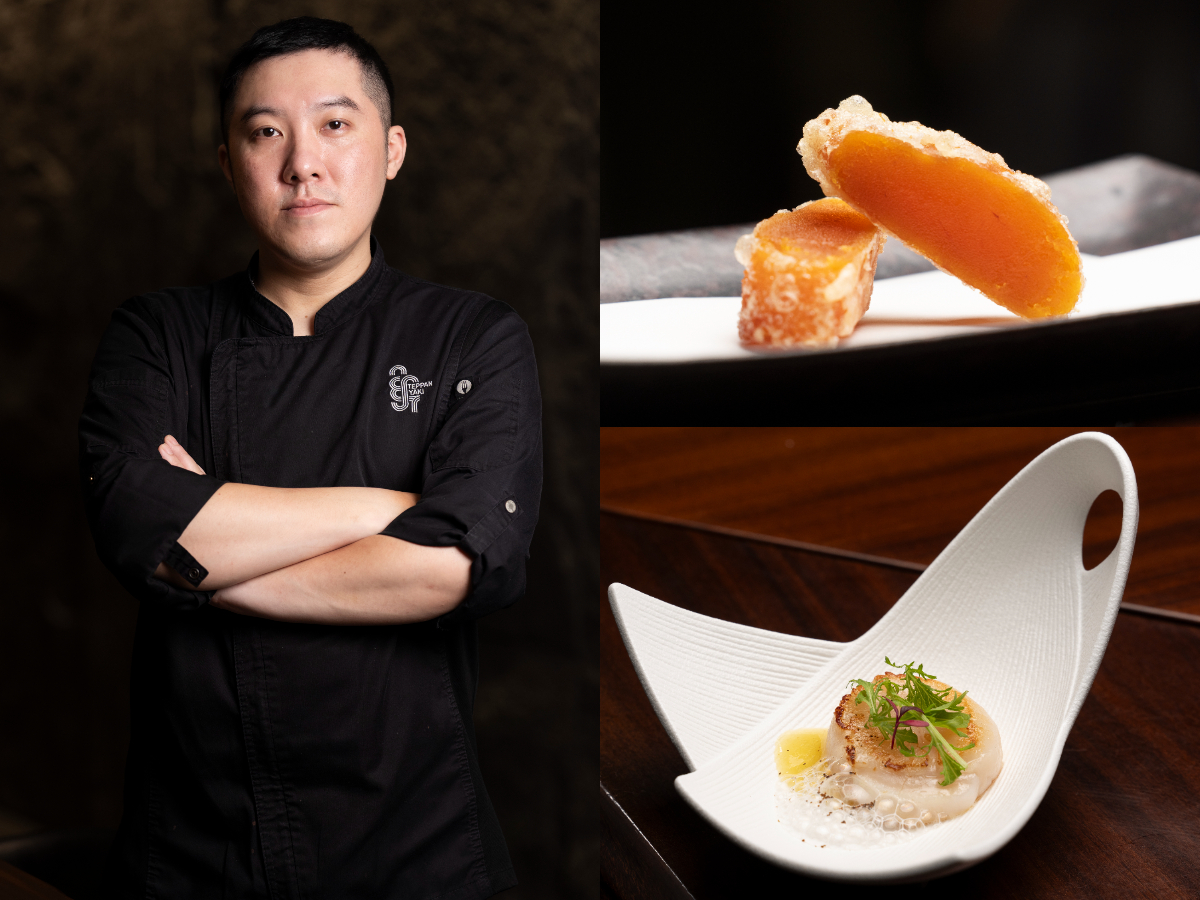
走進 NEST,會發現最動人的對話,發生在鐵板與食材之間。NEST 主廚廖譽展,大家都叫他「小義主廚」,二十多年在鐵板前磨練,從上牛、朝桂一路到台北大倉久和大飯店,料理過無數頂級食材,也看過各種形式的餐廳服務,十年飯店歲月讓他磨出了手藝,卻也讓他愈來愈清楚,自己真正想呈現的料理,需要一個不被框架限制的地方,於是他選擇出走,創了屬於自己的家「NEST 巢」。

以精準火候引出油脂香氣,肉汁飽滿、入口即化,佐昆布鹽、煙燻鹽、貢布胡椒與蒜片提味,以最簡練的方式呈現頂級食材本身的層次,盡顯鐵板燒職人精神。
他希望每一位走進 NEST 的人都能放鬆,像回到家的感覺,「我應該會長時間待在這裡,等於是第二個家。」話不多,邏輯直接。不刻意經營氣氛,不追流行;現在 NEST 的賓客有八成是熟客,一回來就鬆開了肩膀,和在飯店用餐的那種拘謹完全不同。小義主廚記不住客人說過什麼,他也坦白說不太會聊天,但他記得每一道讓來客想再回來的料理。在 NEST,鐵板就是他的語言,食材就是他的表達。

Chef Liao Yu Zhan of NEST Teppanyaki
Twenty Years at the Teppan, A Fragrance That Speaks Beyond Words
Step into NEST, and you will soon realize that the most captivating conversation takes place not between people, but between the teppan and the ingredients laid upon it. For more than two decades, Chef Liao Yu Zhan, affectionately known as Chef Xiao Yi, has honed his craft in front of the iron griddle. His culinary journey began at renowned establishments such as Shang Niu and Chao Gui before leading him to The Okura Prestige Taipei, where he spent a decade refining both technique and discipline.Working with countless premium ingredients and witnessing every facet of restaurant service, those years in luxury hospitality sharpened his skills while revealing a deeper truth: the cuisine he truly wanted to create needed a space free from limitations. That realization inspired him to step away and build a place of his own—a nest he named NEST.
His vision was simple. Every guest who walks through the door should feel at ease, as though returning home. “I’ll probably spend most of my time here—it’s like my second home,” he says matter-of-factly. There is no attempt to manufacture atmosphere, nor any desire to chase fleeting trends. Today, nearly eighty percent of NEST’s clientele are returning guests. The moment they sit down, their shoulders relax, free from the formality often associated with hotel dining.Chef Xiao Yi admits he is not much of a conversationalist. He may not remember every story his guests have shared, but he remembers every dish that makes them want to return. At NEST, the teppan is his language, and ingredients are how he expresses himself.

每週日本空運冷藏頂級干貝,鐵板煎至表面金黃,佐金鑽鳳梨醬、牛奶泡泡與主廚私藏京都原了郭黑七味,以台灣古早味「鹹酸甜」為靈感的夏季限定之作。
鐵板不語,料理說話
鐵板燒有一個其他料理形式比不上的特質:透明。客人坐在鐵板前,看得到食材、看得到火候、看得到主廚的每一個動作,「新鮮,然後客人看得到,比較放心。」小義主廚說,鐵板的好在於實體可見,食材攤在眼前,沒有模糊地帶。這對他而言既是壓力,也是驅動力。「上來就是不能出錯的,」他說,語氣不帶張揚,只是陳述事實,「出我自己想做的味道,不管別人講什麼,這裡比較不會被侷限。」創業後最大的自由,是終於可以讓那些在飯店裡沒辦法做的想法,完整呈現在客人面前。

這個「不被侷限」,在菜單形式上也看得出來。NEST 走無菜單路線,小義主廚不採固定套餐,理由實際:固定菜單一旦某項食材當天取得不了,整套就垮了;無菜單才有變通空間,「想把新鮮的東西給客人,無菜單比較不會被食材侷限。」當天有好的野生魚,就直接上桌;眼下是黑鮪魚的季節,整個菜單的方向就跟著走。醬汁也是,隨菜單和季節調整,在意的只有一件事:味道能不能融合。料理是即時的,食材是當日的,每一道都是限定版。

When the Teppan Speaks
Among all culinary styles, teppanyaki possesses one incomparable quality: transparency.Guests seated before the teppan can see everything—the ingredients, the heat, and every movement of the chef’s hands. “Freshness matters, and when guests can see it for themselves, they feel reassured,” Chef Xiao Yi explains. Ingredients are displayed openly, leaving no room for ambiguity.That transparency brings both pressure and motivation.“Once the dish is on the teppan, there’s no room for mistakes,” he says without bravado, simply stating a fact. “Here, I can present the flavors I truly want to create. No matter what others say, I’m not restricted by the same boundaries.”The greatest freedom of opening his own restaurant is the ability to fully realize ideas that once remained impossible within a hotel setting.
That sense of freedom is reflected in NEST’s menu philosophy. The restaurant embraces an omakase-style format rather than a fixed tasting menu. The reasoning is practical: if a particular ingredient becomes unavailable that day, an entire preset menu can unravel. A flexible format allows the kitchen to follow the market and showcase the finest ingredients available.“I want to serve guests the freshest ingredients possible. An omakase menu isn’t limited by what’s written on paper.”If exceptional wild-caught fish arrive that morning, they become the centerpiece. During bluefin tuna season, the entire menu naturally evolves around it. Sauces shift with the seasons and ingredients as well. For Chef Xiao Yi, only one question matters: do the flavors come together harmoniously?
The cuisine is immediate, the ingredients are of the day, and every course exists as a limited edition.

選用岩手 A5 和牛龜子肉,內捲花崗山剝皮辣椒、嚴選皮蛋與老油條,以皮蛋瘦肉粥為概念發想,皮蛋香氣、辣椒微辣與油條脆感層層交疊,為獨有的招牌料理。
夜市裡的台灣味,在鐵板上翻出新姿
驚喜,從前菜展開。NEST 的熱前菜,是小義主廚從開店做到現在的私房春捲,口味會換,精神不換。這次是三杯雞捲:南投有機紅玉雞胸肉裹上春捲皮,搭配他自己煉製的三杯雞醬汁,台菜的魂,包進了薄脆的外殼裡。之前做過章魚燒捲、烤玉米捲、咖哩麵包捲、明太子捲——每一次換口味,都是一次對台灣日常飲食的重新詮釋。靈感從哪來?「我很喜歡逛夜市,喜歡去夜市找靈感。」小義主廚說。不是分子料理書,不是海外取經,是夜市攤前排的那條隊,是從小吃到大的味道。他有辦法把生活裡最接地氣的滋味,翻譯成鐵板上的高規格料理,又不讓它失去原本的親切感。
NEST 的招牌之一,也是這套邏輯下的作品。「皮蛋牛肉捲」靈感來自皮蛋瘦肉粥,他把瘦肉換成牛肉,包進台南皮蛋、花蓮剝皮辣椒,肉香、皮蛋的 Q 彈、辣椒的鹹辣在口中層疊,「看似不搭的東西,組合在一起滿好玩的。」這道菜曾經從菜單消失過一陣子,但熟客念念不忘,尤其是從國外回台灣的客人,走進 NEST 第一件事就是點這道,因此後來又悄悄回來了。吃一口皮蛋牛肉捲,像是在鐵板前讀到了一篇關於台灣的短篇小說,熟悉、有點意外,又有點想從頭再讀一遍。
Reimagining Taiwan’s Night Market Flavors on the Teppan
The surprises begin with the appetizer.One of NEST’s signature opening dishes is a spring roll creation that has remained on the menu since day one. The flavors change, but the spirit remains the same.
NEST Special Appetizer(3-Cup Chicken rolls)
Organic Ruby Chicken breast from Nantou is wrapped in a delicate spring roll pastry and paired with Chef Xiao Yi’s house-made Three-Cup Chicken Sauce. The soul of a beloved Taiwanese classic is encased within a crisp, delicate shell.Past iterations have included Takoyaki Rolls, Grilled Corn Rolls, Curry Bread Rolls, and Mentaiko Rolls. Each variation offers a fresh interpretation of Taiwan’s everyday flavors.Where does the inspiration come from?“I love wandering through night markets. That’s where I find my ideas,” he says.Not from molecular gastronomy textbooks or overseas culinary pilgrimages, but from the queues in front of humble food stalls and the flavors he grew up with. Chef Xiao Yi possesses a rare ability to elevate familiar Taiwanese street food into refined teppanyaki creations while preserving the warmth and nostalgia that make them so beloved.
One of NEST’s most iconic dishes follows that same philosophy.
Century egg / A5 Wagyu Rolls
Inspired by the comforting flavors of century egg pork congee, Chef Xiao Yi replaces the traditional minced pork with A5 Wagyu beef, pairing it with Tainan century egg and peeled chili peppers from Hualien. The richness of the beef, the springy texture of the century egg, and the savory heat of the chili unfold in layers across the palate.“Sometimes the most unexpected combinations turn out to be the most interesting,” he says.The dish briefly disappeared from the menu, only to be requested time and again by loyal patrons. Overseas Taiwanese returning home would often walk through NEST’s doors and ask for it immediately. Eventually, it quietly found its way back.One bite of the Century Egg Wagyu Roll feels like reading a short story about Taiwan—familiar, surprising, and somehow compelling enough to revisit again and again.

鹿兒島明蝦、長野星鰻、時令蔬菜、生鮮干貝、炸海膽與烏魚子,以日本太白胡麻油提出胡麻底香,穿插鐵板料理之間,一席兼得兩種料理技法。
值得一再赴約的巢
品嚐鐵板燒料理的中場,看著鹿兒島明蝦和長野星鰻從油鍋裡起來,面前竟出現了天婦羅!鐵板燒與天婦羅,在正統日式料理的邏輯裡是兩條平行線,小義主廚令兩者相遇,讓客人於同一席之間,同時享用兩種截然不同的料理技法。天婦羅選用日本空運直送的鹿兒島明蝦、長野星鰻、時令蔬菜,以及生鮮未冷凍的干貝,炸油特別選用日本太白胡麻油,讓每一口多了一層胡麻的底香;穿插其中的鐵板料理,則維持著一貫的直火直熱、食材當前的臨場感。這樣的搭配,不計成本,也不按牌理,但吃過的人都說,值得。

小義主廚說最近腦袋裡有一個新構想還沒做出來,是薄千層派搭配鐵板現煎牛肉,有點像蛋塔泥的質地,鹹的。他笑說或許是職業倦怠,但說起這道還沒成形的料理,眼神裡有光,那分明是對料理的熱情,還在醞釀。二十年鐵板前,那縷從鐵板升起的香氣,早已化進每一道菜裡,無聲,卻值得一品再品。

A Nest Worth Returning To
Midway through the dining experience, guests watch as Kagoshima Kuruma Prawns and Nagano Conger Eel emerge from the fryer, only to realize that a tempura course has appeared before them.In traditional Japanese cuisine, teppanyaki and tempura are distinct disciplines that rarely intersect. Yet Chef Xiao Yi brings the two together, allowing diners to experience contrasting cooking techniques within a single meal.The tempura selection features air-flown ingredients from Japan, including Kagoshima Kuruma Prawns, Nagano Conger Eel, seasonal vegetables, and fresh, never-frozen scallops. The frying oil is specially chosen Japanese white sesame oil, lending each bite a subtle, nutty fragrance.
Between these courses, the teppan maintains its signature immediacy—direct heat, open-fire precision, and the captivating theatre of ingredients prepared before the guest’s eyes.It is a pairing that disregards conventional cost calculations and defies traditional expectations. Yet those who have experienced it unanimously agree: it is worth every bite.

Recently, Chef Xiao Yi has been developing a new idea that has yet to fully materialize—a delicate mille-feuille pastry paired with freshly seared beef from the teppan. He imagines a savory filling with a texture reminiscent of egg tart custard.With a laugh, he jokes that perhaps it is a symptom of professional restlessness. Yet when he speaks about the unfinished dish, his eyes light up unmistakably. What shines through is not fatigue, but the enduring passion of a chef still driven to create.After more than twenty years standing before the teppan, the fragrant wisps rising from the iron surface have become part of every dish he serves—quiet, understated, yet endlessly worth savoring.

INFO BOX
NEST 巢 TEPPANYAKI
地址:台北市中山區伊通街87巷10-1號
電話:(02)2508-1391
發表迴響