EDITOR Angel Huang|TRANSLATOR Aurora Lin|PHOTOGRAPHER Angel Huang
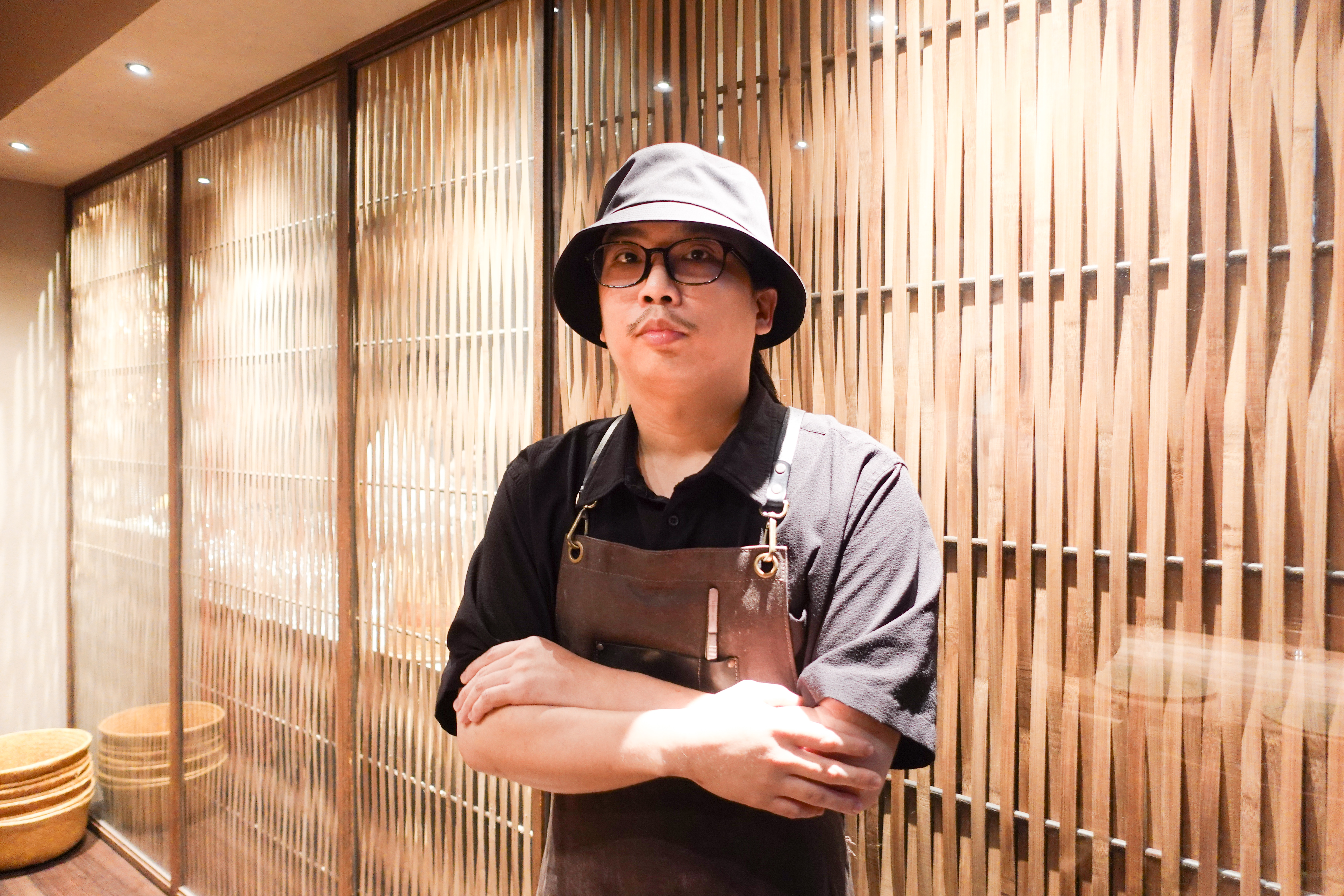
近年來,將本土精神注入精緻餐飲的敘事中,逐漸成為一種向內探索的新潮,位於大直鬧中取靜的「斑泊」餐廳,便是將法餐結合台灣文化的新興代表之一。斑泊自 2023 年開幕以來,連續三年獲得米其林一星肯定,主廚蘇品瑞將本身敏感細膩的個性,化為對細節的極致追求與觀察,專注於料理的五感(視覺、聽覺、嗅覺、味覺、觸覺)體驗,在餐盤上堆疊出富有隱喻的風味,敘述出這片土地珍貴的生命記憶。
Island Memories on the Fine Dining Table
Interview | Chef Su Pin-Ruei of Ban Bo
In recent years, Taiwan’s fine dining landscape has entered a more introspective chapter. Rather than borrowing narratives from abroad, a new generation of chefs has begun looking inward—drawing inspiration from the island’s own culture, history, and collective memory. Among the most compelling examples is Ban Bo, a quietly refined restaurant tucked away in Taipei’s Dazhi district, where French culinary techniques become a medium for expressing the richness of Taiwanese identity. Since opening in 2023, Ban Bo has been awarded one MICHELIN Star for three consecutive years. At its helm, Chef Su Pin-Ruei transforms his naturally thoughtful and perceptive character into an unwavering pursuit of precision. Every dish is conceived as a complete sensory experience, engaging sight, sound, aroma, taste, and touch. Layer upon layer, each composition unfolds like a quiet narrative, preserving fragments of Taiwan’s cultural memory through the language of fine dining.

記憶中的味覺共鳴
過去,蘇主廚曾長期以為長輩因世代差異吃不懂西餐,但後來發現長輩品嚐生魚片時的那份滿足,是源於他們受殖民歷史遺留下來的集體生命記憶。這讓他深刻反思,如果一味地在精緻餐飲中塞入過多台灣人生活中從未出現過的西式元素,客人的身體記憶便會感到抽離。因此,斑泊的風味核心,是將「在地、本來就存在的、熟悉的區間」巧妙地與精緻餐飲結合,以此喚醒人們最深層的味覺共鳴,也希望精緻餐飲能夠為台灣本土文化創造出另一種優雅、細緻的面向。
在斑泊的世界裡,一道成功的料理必須具備「皮囊(外觀)、骨幹(味道)與靈魂(理念)」。以今年新菜〈離島〉為例,便完美體現了此番哲學。主廚捨棄常規的法式底醬,刻意選用帶有厚實底蘊的「馬祖老酒」作為醬汁核心,搭配蒸煮水蓮、土魠魚與海葡萄,並在最上方綴以形似海鷗滑翔的脆片,將台灣獨有的離島老酒文化,與候鳥越過海岸線的礁岩意象完美結合。
Awakening the Memory of Taste
For years, Chef Su believed that older generations simply found Western cuisine difficult to appreciate because of differences in age and upbringing. It was only later that he realized the deep satisfaction they experienced while eating sashimi had little to do with the food itself. Rather, it was rooted in a collective memory shaped by Taiwan’s colonial past—a familiar taste carried quietly through generations. That realization fundamentally reshaped his understanding of fine dining. If a menu is filled exclusively with Western ingredients and flavors unfamiliar to Taiwanese diners, it inevitably creates a distance between the cuisine and the diner’s own sensory memory. At Ban Bo, therefore, the foundation of every creation begins with what is already deeply embedded in everyday Taiwanese life—flavors that feel familiar, authentic, and naturally rooted in this land. By weaving these elements into the vocabulary of contemporary fine dining, Chef Su hopes to awaken an emotional resonance that reaches beyond taste itself, while revealing another refined and elegant expression of Taiwan’s culinary culture.
For Chef Su, every successful dish must possess three essential qualities: its skin, its bones, and its soul. The appearance draws diners in; the flavor gives the dish structure; and the concept breathes life into everything that follows. This philosophy finds its fullest expression in this year’s signature creation, Offshore Islands. Rejecting the conventional French sauce base, Chef Su instead builds the dish around aged Matsu rice wine, allowing its rich, deeply layered character to become the heart of the composition. Steamed water lily stems, Spanish mackerel, and sea grapes evoke the flavors of Taiwan’s offshore islands, while a delicate crisp, shaped like a seagull gliding above the sea, completes the presentation. Together, the elements capture both the enduring tradition of Matsu’s rice wine culture and the quiet poetry of migratory birds soaring above rugged coastlines. More than a beautifully composed plate, the dish becomes a portrait of the islands themselves—where landscape, culture, and memory converge into a single, unforgettable experience.

廚房內的極致修練
在斑泊向客人呈現精緻餐飲的背後,有著廚房內不為人知的運作模式。蘇主廚將對自我要求的完美主義,延伸至對整個團隊的帶領方式——在斑泊的廚房裡,按下計時器的五分鐘內必須出餐,並堅守料理一旦起鍋便絕不回熱的原則,為的是追求極致精準的口感與風味;甚至當客人中途離席而打亂出菜程序時,團隊寧可將所有的延遲與重新製作的成本附加在自己身上,也絕不妥協品質。
為了訓練團隊的「美學觀察力」,斑泊的內場每天都會訓練員工從當天準備的十幾份相同菜色中,觀察每盤微妙的差異,排序列出外觀最頂尖的幾份。他甚至會邀請餐廳實習生的家長前來用餐,當這些平日在廚房受高壓訓練的年輕夥伴,在餐桌前第一次為自己的父母拉椅子、聽到父親說出「這是我養你這麼大,你第一次幫我拉椅子」的震撼時,才突然領悟到精緻服務背後的意義。
The Pursuit of Perfection Behind the Kitchen Doors
Behind every refined dining experience at Ban Bo lies a kitchen driven by extraordinary discipline. Chef Su extends the same uncompromising standards he demands of himself to every member of his brigade. Once service begins and the timer is set, each dish must leave the kitchen within five minutes. Food that has been plated is never reheated, a principle rooted in his belief that every course should be experienced at its precise moment of perfection. Even when unexpected interruptions—such as a guest leaving the table mid-service—disrupt the sequence, the team willingly absorbs the time, cost, and effort required to remake a dish rather than compromise the quality delivered to the guest. For Chef Su, excellence is not simply a matter of technical execution; it begins with cultivating an instinct for beauty.
Each day, the kitchen prepares multiple identical plates, challenging the team to study the subtle differences in every presentation before selecting those they believe best embody the restaurant’s aesthetic standards. Through this daily exercise, observation becomes second nature, gradually refining the eye as much as the hand. He has even invited the parents of restaurant interns to dine at Ban Bo. For many young cooks accustomed to the relentless pace and pressure of professional kitchens, the simple act of pulling out a chair for their parents becomes unexpectedly profound. When one father quietly remarked, “I’ve raised you all these years, and this is the first time you’ve ever pulled out a chair for me,” the moment transformed their understanding of hospitality. They realized that genuine service extends far beyond flawless technique—it is, above all, an expression of care.

餐廳空間的美學延伸
斑泊對於島嶼記憶的轉譯,早已超越餐盤本身,而是將這份感性延伸至整個用餐空間、餐具乃至音樂的巧思。在這裡,你看不見傳統西餐常見的純白瓷盤與西式桌巾,而是改以與陶藝職人耗時一年磨合、客製燒製的大地色系器皿盛裝;耳邊傳來的旋律,則是流淌著以古琴與弦樂重新詮釋的台灣民謠。從器皿、聽覺到工藝物件,空間裡的每一個細節都在與料理對話,共同形塑出一個讓人能與內心沉靜共處的感官場域。斑泊正以這份內斂、不張揚的優雅與細緻,讓世界看見當代台灣餐飲的文化自信。
An Extension of Island Aesthetics
At Ban Bo, the interpretation of island memories extends well beyond the cuisine itself. It flows naturally into the dining environment, the tableware, and even the music, creating a complete sensory narrative. Instead of the pristine white porcelain and linen tablecloths traditionally associated with Western fine dining, each course is presented on bespoke earth-toned ceramics developed over the course of a year in close collaboration with Taiwanese ceramic artisans. The music accompanying the meal is equally intentional, with familiar Taiwanese folk melodies reimagined through the graceful dialogue of the guqin and string instruments. From handcrafted ceramics and carefully curated soundscapes to every thoughtfully chosen object within the space, each detail exists in quiet conversation with the cuisine. Together, they create an immersive environment where guests are invited to slow down, reconnect with themselves, and experience Taiwan through every sense. For Chef Su, fine dining has never been about presenting luxury for its own sake. It is about translating the memories, emotions, and cultural identity of this island into a contemporary language that resonates with today’s diners. Through an elegance that is understated rather than ostentatious, Ban Bo has become a quiet yet confident expression of contemporary Taiwanese cuisine. It reminds us that the most memorable dining experiences are not always those built upon novelty, but those that awaken something deeply familiar—something that has long existed within us, waiting to be remembered.

發表迴響